Contaminated Diesel Results in Diluted Oil (Part 1)
I received a phone call a while back from one of my past customers, a charter boat skipper here in Auckland. He, the vessel’s owners and their guests were sick and tired of the constant level of smoke coming from the vessel exhausts, especially during the boarding process and the guests’ “welcome aboard” drinkies. The skipper was keen to use our diagnostic service to see what the root causes were and to see if anything other than stripping down the engines and rebuilding them could be done to reduce the smoke. The skipper also questioned why both engines were slow to kick into life as well as why the vessel had lost 3 to 4 knots top-end speed over the past 6 months or so.
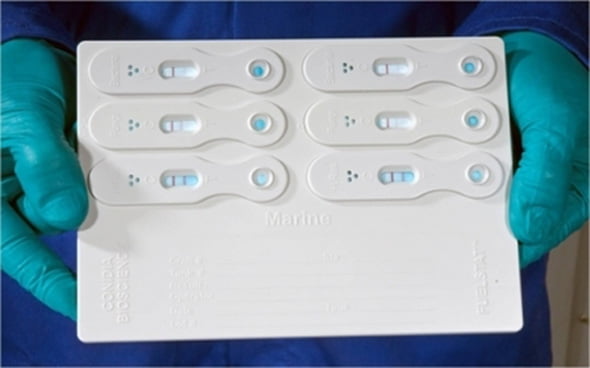
From our point of view there were two main areas of concern. First off, oil samples would need to be drawn from both engines to check on the condition of the oil. Secondly, the fuel would need to be analysed for its microbial content. This was especially important as both sight glasses on the Racor filter/separators units showed signs of a heavy microbial contamination (Diesel Bug).
We started by warming up the engines to operating temperature before drawing the oil samples. Fuel samples from both Racors were also drawn off and sent for analysis. While it only took two days to get the oil analysis results back unfortunately it would take up to a week to receive the fuel sample results as the lab have to culture/grow the microorganisms (the bugs).
The results from the lab analysis of the oil samples gave us our first clue as to what, in part, may have been the cause of the smoke, not to mention some of the other issues raised by the skipper. Fuel Dilution! Unfortunately both engines had around 4-5% of diesel in the oil. Fuel dilution problems can normally be attributed to either injector, internal fuel line or pump seal leakage. As a result of having diesel in the oil the viscosity (oil thickness) of the oil was lower, consequently the oil was not providing full protection to the engines. If the injectors were leaking the lack of pressure and correct atomisation of the fuel into the combustion chamber would not only have made the engines harder to start, but also added to the smoking problem. Leakage from the injectors can normally be put down to worn nozzles, which in this case was a little unexpected as the engines had only done around 1800 hrs.
Once we had the results from the microbiological lab we were able to determine the cause of the injector damage. Filamentous fungi or, to be more precise, Hormoconis resinae (a common fungi known as ‘The Diesel Bug’) and lots of it! The results were so high that they sat within the top category (>10,000 cfu p/Ltr) of the Lloyd's Technical Register, Category D.
As a result of the microbial infection in the fuel tanks the damage to the injectors was severe. The size of the particles that were getting through the filtration not only stopped the injector nozzles from reseating properly, but also interrupted the spray pattern by enlarging the fuel droplets. The result was incomplete combustion of the fuel injected into the cylinder, with the carry over of the unburnt fuel being exhausted. The consequence of this was not only the resulting smoke, but also a reduction in engine performance, loss of speed and more than likely an increase in the fuel consumption as well. And with todays prices that meant dollars!
Our recommendation to the skipper was to have the injectors from both engines pulled and serviced and while they were away the Racor filters and fuel lines could then be dismantled and cleaned out thoroughly as well. Once this was done the oil in both engines could then be changed. The fuel in the tanks would also need to be treated before it could be used again. Because this was a charter vessel which turned over a fair amount of fuel the recommendation here was to install Magnetic Decontamination Units. Magnetic units for the treatment of fuel were originally designed in New Zealand with many today still being manufactured here and distributed around the world. The product is fitted into the fuel lines between the tank/s and the primary filter/separators. These magnetic units are a permanent installation that requires little or no ongoing maintenance. Microbes are said to be susceptible to the magnetic field. As the fuel carrying the microbes passes through the units the magnetic field disrupts the cell walls thereby breaking the bond between the individual spores (of the biomass). As a single molecule of only around a micron in size they are then small enough to pass through the filters and pumps and be burnt out via the combustion process without disturbing the injector spray pattern. The spores contained in the unused fuel, which is passed back to the tanks via the return lines are in a dormant state, reduced in size and unable to divide, multiply and grow. From studies done this dormant state is said to last anywhere from 10 days to 3 months. As a result the filters are kept clearly and the microbial growth in the tanks is slowly reduced over time.
Once the Magnetic Decontamination Units were installed and the remedial work on the engines fuel systems completed it was time to run the engines up. The level of smoke from both engines was noticeably lower. It was hard to say by how much, but it was certainly a lot less than before. Also, noted was the fact that there were no longer large rainbow sheen of diesel appearing on the water, which I understand had been emanating from the exhausts. The skipper was happy not only with the reduction in smoke and extra speed, but also with the cost of the exercise. However, that was not where it ended, but until next time that is where we will have to leave it.
Written for Professional Skipper Magazine, Issue 77
Written By Kelvin Hieatt
Marine Diagnostics Ltd
Specialists in Used Oil and Petroleum Analysis