


Welcome to Fuel Test Australia
Fuel Test Australia is the Australasian Distributor for the FUELSTAT Resinae Plus test kits for Aviation, Diesel and Biodiesel Fuels for Australia, New Zealand, PNG, Indonesia and the Pacific Islands.
The FUELSTAT test kits (Part number FMD8 for Diesel and FHR8-2 for Aviation) comply with ASTM D8070-16, are sold in boxes of 8 single use tests per box, and are designed to supersede the IP385 microbial test done in the Laboratories. The FUELSTAT tests for all of the 31 known harmful microbes that grow in diesel/biodiesel/aviation fuels – with results in 10 minutes, not 2-7 days as with the labs and other test kits. The FUELSTAT test kits are sold worldwide but here in Australia and in NZ the test kits are used by BP, Shell (Viva), Caltex and Mobil, Australia Defence Force and Customs + smaller fuel companies, as well as many industrial, mining, agricultural and marine companies + over 335 Airlines worldwide including Qantas and Virgin Australia.
FUELSTAT does not require any special handling, transportation, storage or disposal requirements (the fuel sample, should be disposed of as per individual company policy), nor does it require any special skills or capital equipment, so why not protect your assets with FUELSTAT?
Learn more about FUELSTAT complying with ASTM D8070-16 here.
Beat the Dreaded Diesel Bug and Jet Fuel Fungus
FUELSTAT® Test Kits – For the fast, accurate and onsite detection of microbial contamination in Diesel, Biodiesel and Aviation Fuels:
- Marine
- Land
- Air (ground storage)
- Fuel Storage and Forecourt Supply
Onsite testing, with no additional equipment, that detects all relevant microbes (bugs), including Hormoconis resinae – commonly known as the “Diesel Bug or Jet Fuel Fungus”.
Quick, accurate and easy to use, with simple self interpretation. RESULTS WITHIN 10 MINUTES!!! Enables real time decisions to be made and any required actions to be undertaken immediately!

Relied upon in the Aviation Industry for over 10 years and now used by more than 330 international and regional airlines “Tried, Tested and Effective”
… Now developed for commercial use in the Marine, Land Diesel and Biodiesel Industries.
Microbial Contamination can cause:
- Blocked Filters
- Engine Failure
- Degraded Fuel
- Exhaust Emissions
- Corrosion Damage
- Expensive Repairs
- Costly Tank Entries
- Disrupted Operations
- Increased Fuel Consumption
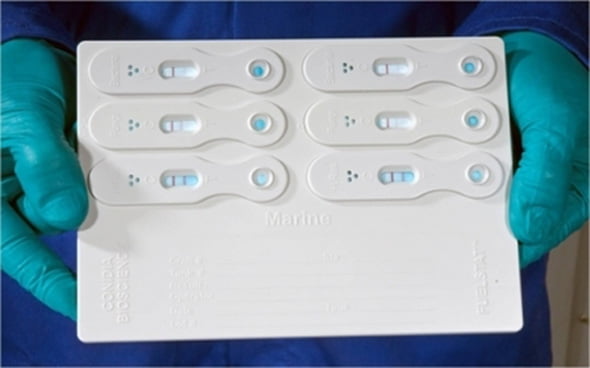
Our Product Range Includes, but is not limited to:
- FUELSTAT Resinae Plus test kits for Aviation Fuels – part # FHR8-2
- FUELSTAT Diesel + Biodiesel test kits – Part # FMD8
- 400ml PTE plastic sample containers
- 1000ml PTE plastic sample containers
- 250ml glass sample bottles
- 500ml glass sample bottles
- 1000ml glass sample bottles
- 500ml Tin sample containers
- 1000ml Tin sample containers
- Complete Fuel Sampling Kits
- 25L Grotomar 71 Biocide
- Fuel Sample Extraction Kits